
The Women We Forget to Crown
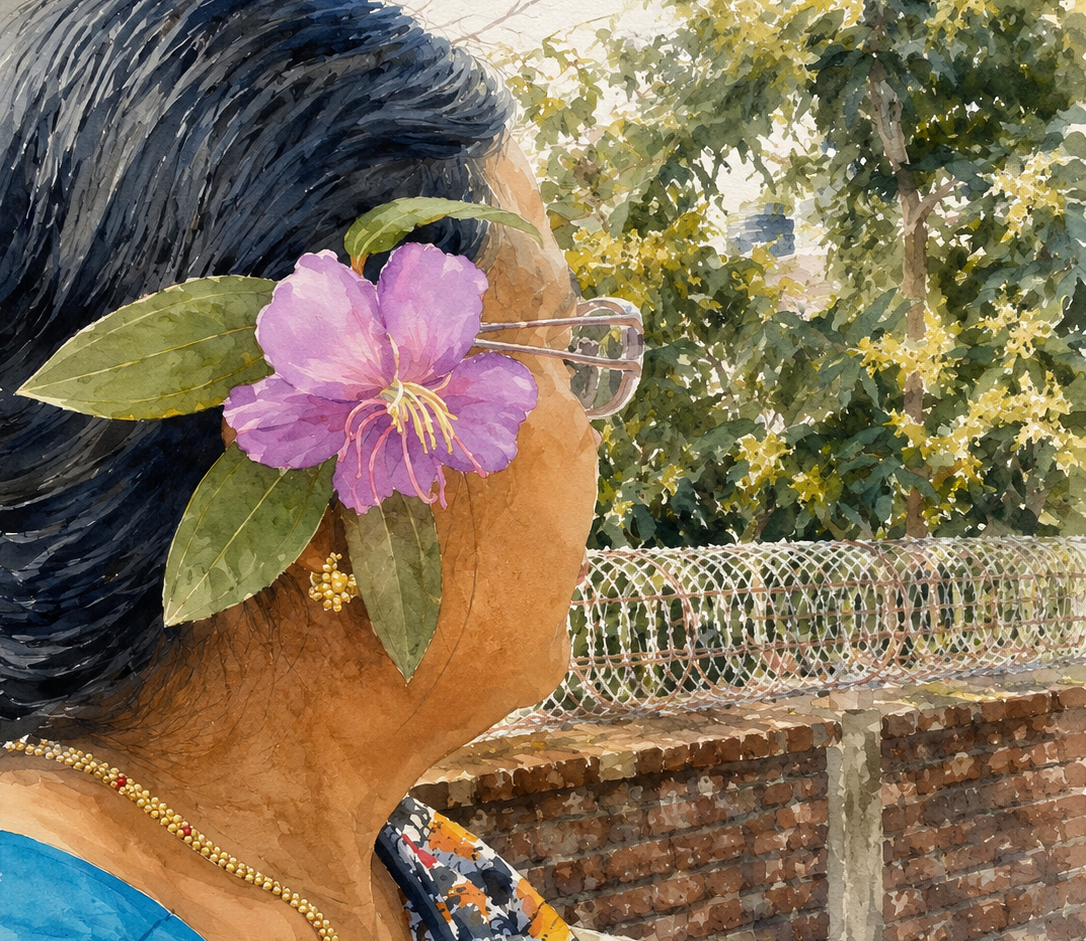
Let’s think of an imaginary character-a woman, let’s say her name is Maloti, like the Shadharon Meye of Rabindranath Tagore. She gets married in her late teens or early twenties. Before she reaches thirty, she has two or three children. She moves into a household that is not quite her own. Though she finds it difficult at first, she slowly learns to live with unfamiliar people, adjusts to expectations she never chose, and perhaps deals with difficult (toxic!) in-laws. Somewhere along the way, she puts aside the passions and ambitions she once had, even changing into a completely different person. She raises her children, manages a home, takes care of everyone around her, and keeps going.
We, South Asians, are more or less familiar with this story. Many of us have seen it in our mothers. We have heard pieces of it in the stories of our grandmothers. We have grown up watching the exhaustion and compromises that accompanied their lives. We know they struggled. We know that many things were unfair.
Last spring, one day, I was sitting at my dining table with a cup of coffee, thinking about my mother and the struggles I have watched her move through throughout her life. I found myself wondering: what if she had quit earlier? What would have happened? There is no way to simulate that life as every bit of a moment is too uncertain with thousands of possibilities. Then I thought about her mother, my dida (grandmother). What if she had quit too? What if, after becoming widowed, she had simply walked away, leaving behind three young children? Instead, she raised them almost as a single mother. My mother grew up witnessing her struggle, just as I grew up witnessing my mother’s.
This brought the idea of the resilient woman into my thoughts. Currently I’m reading Arundhati Roy’s memoir about her mother, Mother Mary Comes to Me. Possibly, this book gave me the nudge to finally write it down.
Among the many ways their resilience may have taken shape, this is what it looked like in my own life. They built a holding place for me, or for the generations that came after them. They lived within constraints, yet somehow made room for something of their own. Today, I find myself with opportunities like pursuing higher studies in the United States with full funding, travelling across countries, and making choices about my life largely on my own- that I do not take for granted. I can do these partly because they subtly raised me to be like that. Of course, I have my own scars too. And so, I find myself wondering: what if a woman can build something without ever looking rebellious?
It is easy to look at my mother or my dida and see what they endured. But they did not get “nothing” in return. My dida raised three children who went on to build their own lives. My mother raised children who, I hope, are doing well—and who can now give back some of the care, love, and security that these women spent their lives providing. Can that not also be understood as a form of success? And yet, within some ways of thinking about feminist agency, women like them can be difficult to place. They did not walk out of their marriages. They did not necessarily reject traditional family structures. They may not have openly confronted their husbands or in-laws. They just stayed. So, were they simply submissive?
I am not convinced.
Anthropology teaches to be cautious about judging people’s lives only through the ways that make sense to outside observers. This also makes me wonder whether the expression of freedom and agency always has to look the same. Perhaps agency does not always announce itself through rebellion or refusal. People make choices within social, economic, cultural, and familial constraints. Sometimes agency is found in negotiation, adaptation, persistence, and the ability to create something meaningful within circumstances that cannot simply be abandoned.
Think about Maloti again.
Perhaps she could not leave, but she found ways to negotiate with the people around her. Perhaps she gave up one dream but created another through her children. Perhaps she quietly built a household, a livelihood, a social network, or a sense of independence. Perhaps she made sure her daughter would have opportunities that she herself never had.
Perhaps she endured things she should never have had to endure, but endurance was not the only thing she did. She also found ways to negotiate with the system, reshape what was possible within it, and carry something forward.
This does not mean that women’s suffering should be romanticized. Resilience should never become another expectation placed upon women that “you are strong, so you can tolerate anything”. Nor should staying in an oppressive situation automatically be interpreted as empowerment.
The point is, are we recognizing those women for the resilience they showed?
Perhaps we have become accustomed to recognizing freedom when it looks like a rupture. We celebrate the woman who leaves, refuses, rebels, and breaks away. And rightly so. But what about the woman who remains and slowly changes what is possible from within? What about the woman who does not break the structure but makes a life inside it that is larger than what the structure intended for her?
Sometimes resistance is loud. Sometimes it is extraordinarily ordinary.
Maybe we overlook those resilient women who take the broken pieces and build something with them.
So, did our mothers and grandmothers fail?
I don’t think so.
Perhaps we have simply been looking for their victory in the wrong place. Perhaps we have simply forgotten to crown them.
